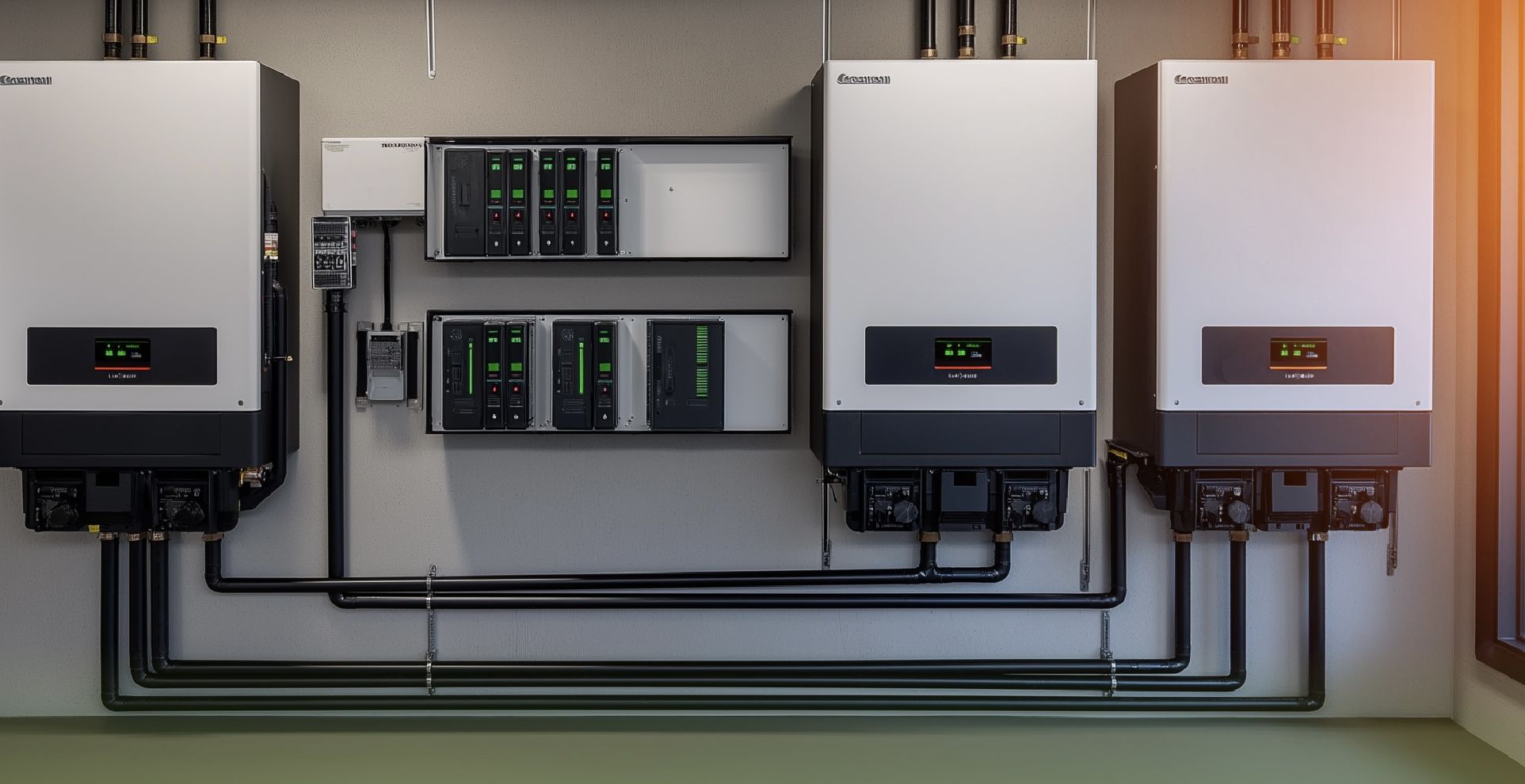
Example systems
Four solar systems for Harare
From a small DC Wi-Fi hotspot site to a 10 kWh whole-home hybrid. Each design shows what it makes, what it stores and what it can run, so you can see which one fits before you size your own.
Comparison
Side by side
Designs 3 and 4 are well balanced. Design 2 is limited by its battery.
| System | Inverter | Panels | Battery (usable) | Solar a dayworst month | At night | Balance |
|---|---|---|---|---|---|---|
| 1. Wi-Fi hotspot site | None (24 V DC) | 600 W | 2.56 kWh (~2) | ~2 kWh | ~2 days of backup | Balanced |
| 2. Starter hybrid | 3.5 kW | 1.8 kWp | 2.4 kWh (~1.9) | ~6 kWh | ~1.0–1.3 kWh | Limited at night |
| 3. Family home | 6.2 kW | 3.6 kWp | 5.12 kWh (~4.1–4.6) | ~12 kWh | ~3.0–3.6 kWh | Well balanced |
| 4. Whole home | 6.2 kW | 6 kWp | 10.24 kWh (~8.2–9.2) | ~20 kWh | ~6.7–7.7 kWh | Inverter at its limit |
How the figures are worked out
- SunAbout 4.5 peak sun hours in Harare's worst months; 5.5–6 on good days
- System efficiencyAbout 75 % from panel to load (heat, wiring, charging and inverter losses)
- BatteryLiFePO₄ at 80 % usable depth of discharge (some brands allow 90 %)
- PanelsFacing north at about 18° tilt, matching Harare's latitude
- Standby drawAbout 40–70 W from the inverter just being switched on, depending on size
- At nightUsable battery energy after about 8 % inverter loss and 12 hours of standby draw
Approximate planning estimates. Wiring is confirmed against the actual panel and inverter datasheets before installation.
Design 1 · Off-grid, 24 V DC
Wi-Fi hotspot site
600 W panels · 2.56 kWh battery · no inverter
An off-grid 24 V DC system that runs a hotspot site around the clock, with 2 days of backup and a 2-day recovery after bad weather.
| Component | Specification | Notes |
|---|---|---|
| Load | About 40 W continuous, about 1 kWh a day | Router about 10 W, access points 10–15 W, backhaul about 10 W, margin 5–10 W |
| Panels | About 600 W (for example 3 × 200 W) | About 2 kWh a day in the worst months |
| Battery | 24 V 100 Ah LiFePO₄ (2.56 kWh) | About 2 kWh usable: 2 days of backup at 80 % depth of discharge |
| Charge controller | MPPT, 24 V, 30 A | 600 W ÷ 24 V ≈ 25 A. Load output with low-voltage disconnect and remote monitoring. Its PV voltage rating must stay above the panels' cold open-circuit voltage, so check it before wiring panels in series (100 V and 150 V models are common). |
| Inverter | None | All equipment runs on 24 V DC with PoE, which avoids inverter losses and a standby draw that would be large next to a 40 W load |
Why it balances
- The panels make about twice the daily load, so after two cloudy days the battery refills in about two sunny days.
- A 300–400 W array would run the site but take about a week to recover.
Site notes
- Surge protection on every outdoor Ethernet run.
- Battery and electronics in a vented, shaded enclosure.
Design 2 · Hybrid
Starter hybrid
3.5 kW inverter · 1.8 kWp panels · 2.4 kWh battery
A workable starter hybrid. The panels make plenty by day, but the 2.4 kWh battery limits what it can run at night and when the grid goes down.
| Component | Specification | Notes |
|---|---|---|
| Inverter | 3.5 kW hybrid (24 V on most models) | About 40–60 W standby draw |
| Panels | 1.8 kWp (for example 4 × 450 W in one string) | About 200 V open-circuit; about 6 kWh a day in the worst months, 7–8 kWh on good days; peak about 1.3–1.5 kW. Check the string's hot working voltage (about 140 V) against the inverter's MPPT range. |
| Battery | 2.4 kWh LiFePO₄ at the inverter's battery voltage | About 1.9 kWh usable. The battery voltage must match the inverter: a 24 V inverter needs a 24 V battery. |
What it can power
- Up to about 1.3 kW of daytime loads straight from the sun.
- About 1.0–1.3 kWh at night: a fridge and lights, or a hotspot site.
- Avoid kettles, irons, geysers and stoves on battery.
Limits
- Battery current: a 24 V battery limited to 100 A supplies about 2.4 kW, so the inverter's full 3.5 kW is not available on battery.
- Standby draw: 0.5–0.7 kWh overnight, about a third of the usable storage.
- Unused solar: the panels make about three times what the battery can store, unless it is used during the day.
Design 3 · Hybrid
Family home
6.2 kW inverter · 3.6 kWp panels · 5.12 kWh battery
A well-balanced household system: the panels refill the battery by early afternoon, and the battery covers the essentials through an evening without grid power.
| Component | Specification | Notes |
|---|---|---|
| Inverter | 6.2 kW hybrid (48 V) | About 50–70 W standby draw; handles motor surges |
| Panels | 3.6 kWp (8 × 450 W in one string) | About 400 V open-circuit, about 430 V on a cold morning, under the usual 500 V limit. About 12 kWh a day in the worst months, 14–16 kWh on good days; peak about 2.7–3 kW. Two strings of 4 only if the inverter's MPPT minimum voltage and input current allow it. |
| Battery | 48 V 100 Ah LiFePO₄ (5.12 kWh) | About 4.1–4.6 kWh usable. Many modules are rated 50 A continuous (about 2.5 kW) and 100 A peak: choose one rated 100 A continuous to carry most of the inverter's output, and set the inverter's battery discharge limit to the module's rating. |
What it can power
- About 2.5–3 kW from the sun by day: fridge, freezer, TV, lights, laptops, Wi-Fi, borehole pump and the washing machine at midday.
- About 3.0–3.6 kWh at night covers the fridge, freezer, lights, TV and Wi-Fi through a grid outage.
- Short kettle, iron or microwave use is fine. Avoid the electric geyser element (6 kWh a day or more); a solar geyser pairs well.
Upgrade path
- Add panels up to the inverter's PV limit (often about 6.5 kWp; check the datasheet).
- Add a second 5.12 kWh battery for longer evenings. With both upgrades this becomes the whole-home system below.
Design 4 · Hybrid
Whole home
6.2 kW inverter · 6 kWp panels · 10.24 kWh battery
A well-balanced whole-home system that uses nearly all of the 6.2 kW inverter's capacity. The inverter is now the system's limit.
| Component | Specification | Notes |
|---|---|---|
| Inverter | 6.2 kW hybrid (48 V) | About 0.8 kWh standby draw overnight. Typical PV input: about 6.5 kWp maximum, single MPPT, about 500 V and 27 A limits; check the datasheet. |
| Panels | 6 kWp (10 × 600 W) | About 20 kWh a day in the worst months, 24–27 kWh on good days; peak about 4.5–5 kW |
| Battery | 2 × 5.12 kWh, or one 48 V 200 Ah LiFePO₄ (10.24 kWh) | About 8.2–9.2 kWh usable. Use the same model throughout, with BMS communication to the inverter. |
String configuration
Five panels in series is safe for voltage; the current is what to check when two strings share one input.
| Panel type | 5 in series: Voc (cold) | Vmp | 2 strings: current | Verdict |
|---|---|---|---|---|
| Large-cellabout 41 V Voc, about 18 A Isc | ~210–220 V | ~160–175 V | ~36 A | Over a 27 A limitUse all 10 in one string instead: about 435 V cold, about 18 A |
| 156-cellabout 53 V Voc, about 14 A Isc | ~265–290 V | ~210–220 V | ~28 A | At the limitCheck the inverter's maximum PV short-circuit current on the datasheet |
Never put ten 156-cell panels in one string: about 535 V exceeds the 500 V limit. A dual-MPPT inverter, with one string of 5 on each input, avoids the current problem entirely.
What it can power
- Almost a whole house by day, including a geyser on a midday timer, a borehole or pool pump, the washing machine and an air-conditioner.
- About 6.7–7.7 kWh at night: fridge, freezer, lights, TV, Wi-Fi and the odd kettle or microwave through a full night without grid power.
- Don't run the geyser, stove and kettle together: they can exceed 6.2 kW.
Upgrade path
- A second inverter in parallel, or a larger 8–12 kW inverter.
Every design
Protection and installation checklist
DC side
- DC fuses or breakers on panel, battery and load lines
- DC isolator between the panels and the inverter or charge controller
- Surge and lightning protection on the PV input, essential in Harare's storm season
- Cable sized for the current and run length to keep voltage drop low
- String voltage and current checked against the panel and inverter datasheets
- Battery BMS communication set up with the inverter (hybrid systems)
AC side (hybrid systems)
- AC output breaker sized to the inverter
- 30 mA earth-leakage (RCD) protection
- AC surge protection
- Manual bypass switch for maintenance
Site
- Earthing of panel frames, inverter and enclosure
- Battery and electronics in a vented, shaded location or enclosure
- Panels facing north at about 18° tilt, clear of shade from 9 am to 3 pm
- Surge protection on every outdoor Ethernet run (hotspot sites)
Preliminary engineering estimates. Final designs are subject to site assessment, detailed engineering, equipment verification and approval by VSSH. Package prices are indicative cash prices from the VSSH price list; the formal quotation sets the final price and what it includes.
Not sure which one fits?
List your appliances in the design tool, or send us your details and an engineer will call you.